

Some Catholic children are being refused enrolment to Catholic schools due to a 2018 schools admissions law, according to an Independent Ireland Councillor.
The Education (Admission to Schools) Act 2018 prevents Catholic primary schools from offering places to Catholic children ahead of others in cases of over-enrolment. The change was sometimes described in ideological terms as “banning the baptism barrier”. Other faith schools can admit their own children first evem in the event of over-subscription.
Writing on X, Councillor Bill Clear of Kildare County Council, said one result of the 2018 law is that “Catholic families are being pushed out of Catholic schools by non-Catholics, while those same schools are still expected to uphold a Catholic ethos”.
“That is not fairness. That is policy failure”.
He added: “Faith-based schools are being stripped of the very right that justifies their existence, yet parents who actively support and practise that ethos are left without places for their children”.
He said the legislation was never honestly debated and ideology trumped common sense, with the result that ordinary families are paying the price.
He concluded that “a school’s ethos matters or it doesn’t. You cannot have it both ways”.
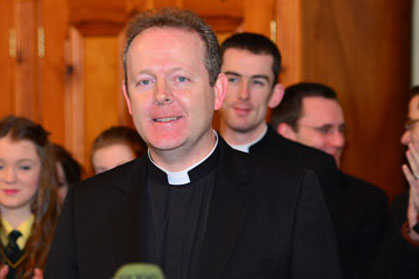
Saint Brigid’s example is needed to navigate contemporary issues such as commercial sorrogacy which run the risk of “dehumanising” us, according to the Archbishop of Armagh, Eamon Martin.
In a homily marking the feast of St Brigid, Archbishop Martin said, “we live in a world where the personal dignity of women is too often threatened by violence, abuse, inequality, commercial surrogacy, pornography, and now by the manipulation of female images online, gender ideology, the false promise of abortion on demand and other forms of exploitation”.
He said that Saint Brigid “challenged people not to cling to the superficial and empty promises of pagan gods and goddesses”, pointing them instead to the one “true God”, Jesus Christ.
She herself lived a life “of mercy towards the poor, the sick, the vulnerable, those people who struggled with diseases or disabilities, the weak, the sinner, the lost”.
Like Jesus, the Archbishop added, she wanted “to promote their dignity at all times, to welcome them, to be with them, to accompany them”.

A Swiss politician has been convicted for firing a sports pistol at a poster featuring a Madonna and child artwork and posting images of the damage online.
Sanija Ameti, 33, an independent Zurich council member formerly of the Green-Liberal party, was found guilty of “disturbing freedom of religion and worship,” the Zurich district court said in its ruling.
She was handed a suspended fine totalling 3,000 Swiss francs (about €3,275), and a penalty of 500 francs. Prosecutors had sought a larger fine.
In September 2024, Ameti fired the sport pistol at an auction poster that showed details of the work “Madonna with Child and the Archangel Michael” by 14th-century Italian painter Tommaso del Mazza.
Ameti afterward apologised, but the shootings and posting caused an uproar and she lost her job in public relations.
She said she had been practicing shots from about 10 meters and found the poster as “big enough” for a suitable target, and only afterwards realised the religious character of the target.

Almost 6,500 fewer pupils were enrolled in primary schools in Ireland last year, reflecting a decade of declining births, according to to the latest data published by the Department of Education and Youth.
Births in Ireland peaked in 2012 at 74,000 and are now about 20,000 per annum lower than that, with the consequences playing out in reduced school numbers. Ireland’s fertility rate at 1.5 children per woman is now well below replacement level of 2.1
Primary school enrolment had fallen by almost 4,000 the previous year and by just over 2,000 the year before that
The decline in enrolment places further pressure on many small rural schools which fear closure or the loss of teachers as a result.
Eleven primary schools have closed permanently since last June due to low enrolment making them unviable.

Teenage girls are now less likely than boys to see themselves marrying one day, in a stark reversal of a decades long trend, according to a nationwide study of the US.
The Institute for Family Studies reported this week that boys in their final year of High School are now almost ten per cent more likely than girls to expect to marry.
That’s the opposite of what the same annual survey had found in the years 1976 to 2010.
From 2010 on, both sexes’ confidence in their expectation of marriage declined, though girls’ did so quicker than boys’. That change sharpened in 2020 with girls surpassing teenage boys in their pessimism.
“This trend is deeply concerning insofar as young women have traditionally been more marriage-minded than young men,” said Brad Wilcox, a University of Virginia sociology professor.
“The move away from embracing marriage is a recipe for misery.”
Mr. Wilcox said that two things have made women more pessimistic about coupling over the past 15 years: anti-marriage messaging among young women on social media and the “male malaise” of young men struggling to launch careers.
“It has an impact on the economy,” he added. “But we are also social animals who flourish when we live for and with others.”
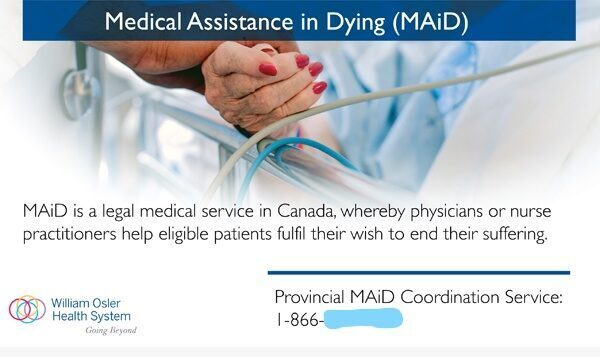
A woman in her 80s was euthanised in Canada at the behest of her husband, despite preferring palliative care which was denied to her.
Canadian authorities are now investigating the case as a possible instance of coerced consent.
The woman had experienced complications after a coronary bypass surgery, spent time in palliative care, was discharged and left in the care of her husband.
She then submitted a request for assisted suicide [MAiD in Canada], but subsequently told an assessor she still preferred palliative care based on her personal and religious beliefs, and she “wanted to withdraw her request.”
Her husband requested a second opinion as a matter of urgency and, unusually, within the span of one day, she was assessed, approved, and given MAiD.
However, according to a report released by the Ontario MAiD Death Review Committee, the initial MAiD practitioner expressed concerns about “the possibility of coercion or undue influence”. Members of the Committee echoed those concerns.
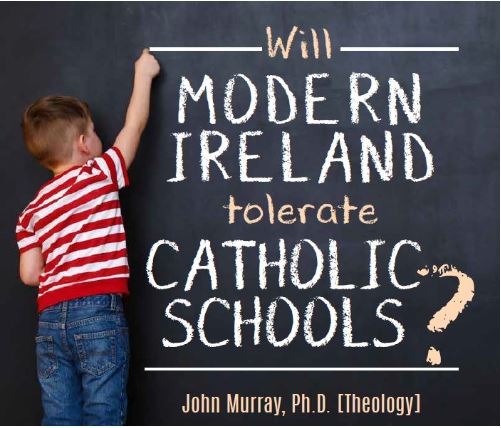
The country’s Catholic bishops are to establish a commission to examine how divestment of more Catholic primary schools to other patrons can be assisted. At present, the vast majority of primary schools come under Catholic management, and the bishops acknowledge this is not sustainable in a more secular and multi-cultural Ireland.
Speaking to The Irish Catholic Jonathan Tiernan CEO, of the Jesuit Education Trust said that “The most constructive approach is to engage with the Department of Education to develop a comprehensive agreement on rebalancing patronage at primary level. This should not be framed as a simple transfer of schools or a strategy of contraction, but as the starting point for renewing those schools that continue under Catholic patronage.”
The Department of Education recently conducted a survey of parents of primary and pre-primary school children to determine how many want divestment. The results have not been published yet.
When divestment of particular schools has been attempted in practice, parents have often pushed back.

An atheist group in Greece has taken a case to the European Court of Human Rights seeking to have religious symbols removed from public buildings, especially courts. If the court finds in favour of the group, the ruling will have European-wide implications including possibly in Ireland.
The Greek City Times reports that the Union of Atheists, which has taken the case against Greece, claims that religious symbols in court rooms are discriminatory. Greek courts have found against the Union which is why the case has now gone to the ECHR.
ADF International has intervened as a third party in support of Greece’s position. The legal advocacy group argues that removing such symbols misinterprets religious freedom and secular neutrality. They reference the ECHR’s landmark 2011 Grand Chamber ruling in Lautsi v. Italy, which found that crucifixes in Italian public school classrooms do not constitute indoctrination or infringe on rights to freedom of thought, conscience, or religion.

China’s birth rate hit another record low last year and for the fourth year in a row, deaths exceeded births. China has fallen to the world’s second most populous country after India. Births fell a huge 17pc in 2025 compared with 2024. The birth rate is now at about 1 per woman, about half population replacement level.
The Standard newspaper in Hong Kong reports: “The country’s population dropped by 3.39 million to 1.405 billion, a faster decline than 2024, while the total number of births dropped to 7.92 million in 2025, down 17pc from 9.54 million in 2024. The number of deaths rose to 11.31 million from 10.93 million in 2024, figures from China’s National Bureau of Statistics (NBS) showed.”
Commenting on the situation demographer Yi Fuxian of the University of Wisconsin-Madison, said on X that births are now at “roughly the same level as in 1738, when China’s population was only about 150 million”.
However, the number of marriages has gone up. The Standard reports: “Marriages rose 22.5 percent from a year earlier to 1.61 million in the third quarter of 2025, putting China on course to halt an almost decade-long annual decline in marriages. Full data for 2025 will be released later this year.” This might lead to an increase in births because marriage and birth rates tend to go up and down together.
Across East Asia, births are well below replacement level and populations are ageing rapidly.

The number of abortions that took place in England and Wales reached a new record high of 278,740 in 2023, according to new official figures. This represents an increase of 10.5pc on the year before and means that one pregnancy in every three ends in abortion in England and Wales. When you add in figures for Scotland and Northern Ireland, just under 300,000 abortions took place in the UK in 2023.
Commenting on the figures, Right to Life UK said: “That almost 300,000 lives have been lost to abortion across the UK in just one year is a clear sign that something has gone very wrong in our society. Having children is essential to the future prosperity of our country. Children are to be prized and celebrated, with full support and compassion offered when pregnancies are unplanned”.
The fertility rate for England and Wales has also fallen to 1.41, well below the replacement level of 2.1 children per woman.